Practicing yoga with your partner isn’t just about improving flexibility—it’s about building trust, deepening emotional connection, and finding mindfulness together. Whether you’re new to yoga or seasoned practitioners, partner yoga invites a playful and powerful way to grow closer through shared movement and breath.
In this guide, we’ll introduce fun and beginner-friendly couples yoga poses that will help you and your partner stretch, connect, and maybe even laugh a little along the way.
Contents
8 Couples Yoga Poses for Trust, Flexibility, and Connection
Let’s explore ten accessible couples yoga poses that promote relaxation, connection, and teamwork.
1. Back-to-Back Breathing
Benefits
- Promotes mindfulness
- Enhances synchronization and trust
- Calms the nervous system
How to Perform
- Sit cross-legged back-to-back with your partner.
- Close your eyes and begin to breathe deeply.
- Focus on matching your inhales and exhales.
- Sit in silence for 2–5 minutes, tuning into each other’s rhythm.
Tip: This is a great warm-up to align energy before moving into poses.
Modifications: Use a cushion or bolster if sitting flat is uncomfortable.
2. Partner Cat-Cow Stretch
Benefits
- Improves spinal mobility
- Encourages synchronized breathing
- Enhances emotional connection
How to Perform
- Begin in a tabletop position, facing each other.
- Reach forward and place your palms against your partner’s.
- Inhale: arch the back (cow).
- Exhale: round the spine (cat).
- Repeat for 5–10 breath cycles.
Tip: Make eye contact occasionally to deepen connection.
Modifications: Perform seated if kneeling is difficult.
3. Twin Tree Pose
Benefits
- Builds balance and focus
- Encourages communication
- Creates playful teamwork
How to Perform
- Stand side by side with inside arms around each other’s waist.
- Place your outside foot against your inner calf or thigh (not the knee).
- Bring your outside hands together overhead.
- Hold for 3–5 breaths, then switch sides.
Tip: Use a wall nearby for extra stability.
Modifications: Try it barefoot on a mat for more grounding.
4. Partner Seated Forward Fold & Backbend
Benefits
- Opens the hips and hamstrings
- Promotes trust through shared weight
- Enhances flexibility
How to Perform
- Sit back-to-back with legs extended.
- One partner folds forward while the other gently leans back.
- Hold for 5–10 breaths, then switch roles.
Tip: Use verbal cues to adjust intensity.
Modifications: Bend knees slightly for less tension.
5. Double Downward Dog
Benefits
- Strengthens shoulders and hamstrings
- Improves body awareness
- Builds trust and support
How to Perform
- Partner A comes into Downward Dog.
- Partner B places hands a few feet in front of Partner A.
- Carefully place feet on Partner A’s lower back or hips.
- Hold for 3–5 breaths, then switch.
Tip: Communicate constantly and move slowly into the pose.
Modifications: Keep feet on the floor for a gentler variation.
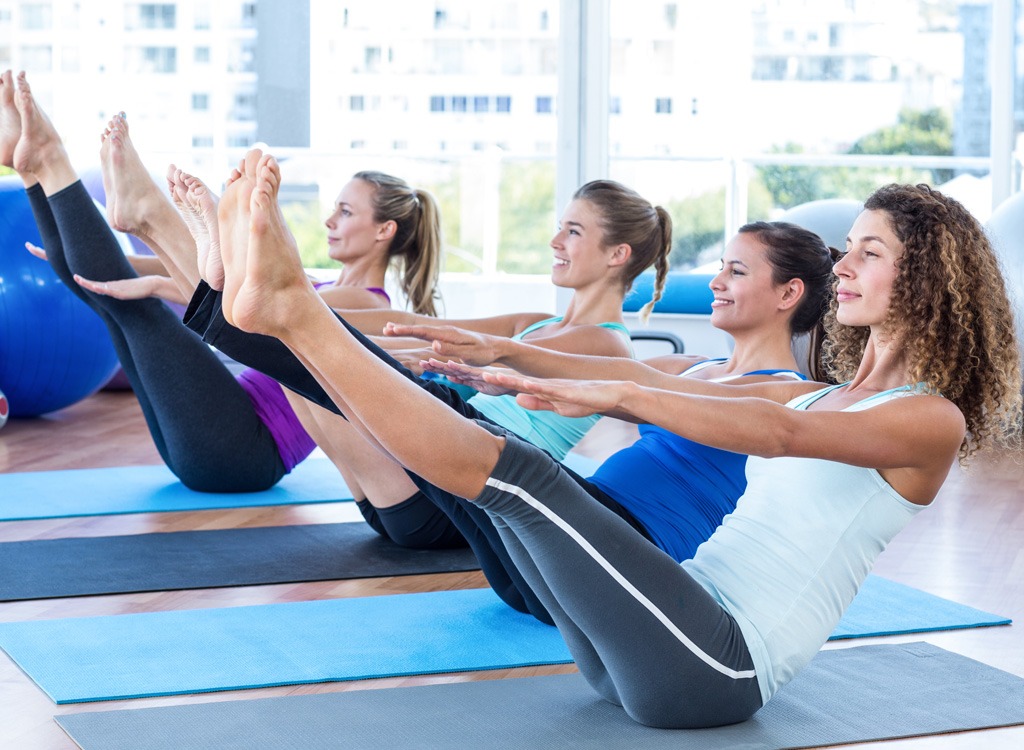
6. Partner Boat Pose
Benefits
- Strengthens core
- Enhances coordination
- Encourages laughter and fun
How to Perform
- Sit facing each other, knees bent.
- Hold hands and bring soles of your feet together.
- Slowly lift feet off the ground, pressing soles together.
- Straighten legs as much as possible and balance.
Tip: Eye contact helps with balance and bonding.
Modifications: Keep knees bent for a beginner-friendly version.
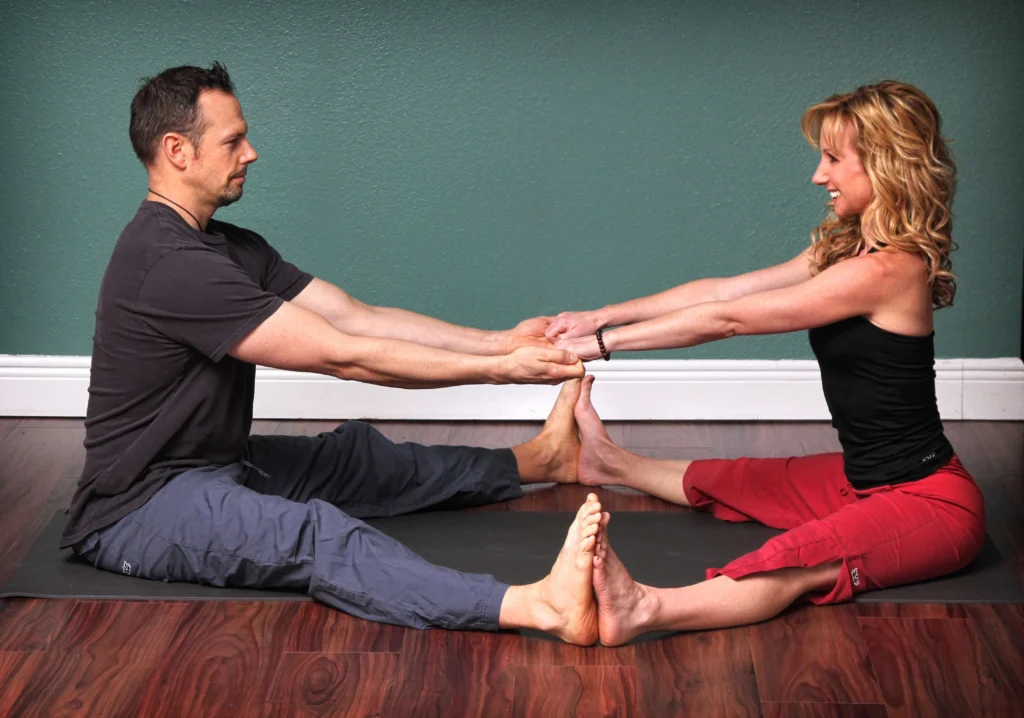
7. Supported Forward Fold
Benefits
- Relieves tension in back and hamstrings
- Promotes relaxation
- Encourages vulnerability
How to Perform
- Sit facing each other, legs extended and soles touching.
- Hold each other’s wrists or forearms.
- One partner gently pulls the other forward.
- Hold for 5–8 breaths, then switch.
Tip: Go slowly and avoid jerking motions.
Modifications: Use a strap if arms don’t comfortably reach.
8. Double Child’s Pose
Benefits
- Soothes the nervous system
- Creates physical closeness
- Restorative and grounding
How to Perform
- Sit back-to-back in child’s pose.
- Rest foreheads on the floor or a block.
- Allow your spines to gently curve against each other.
- Breathe deeply for 2–3 minutes.
Tip: Ideal as a cooldown pose.
Modifications: Widen knees or use bolsters as needed.
Summary: Why Couples Yoga Poses Strengthen More Than Just the Body
Couples yoga poses are more than just a way to stretch—they’re about showing up for one another, offering support, and growing closer through shared movement and mindful breath. Whether you’re exploring couples yoga poses for fun, relaxation, or to deepen emotional intimacy, each posture becomes a moment of connection.
FAQs
What should we wear for couples yoga?
Comfortable, stretchable clothing that allows movement. Avoid loose items that may shift during partner holds.
How can yoga stretches promote trust and support if the couple is going through something?
Physical connection, synchronized breathing, and shared effort can foster emotional openness and reduce tension—making yoga a supportive tool during relationship challenges.

Carl Clay is a health blog author who has been writing about nutrition, fitness and healthy living for over 10 years. He also loves to run, hike and bike with her wife.