Stretch marks can develop from pregnancy, rapid growth, or weight changes, often affecting confidence. Thankfully, stretch marks and laser treatment go together as a proven solution to restore skin appearance. Laser technology targets scar tissue and boosts collagen, helping smooth and fade these marks effectively with minimal discomfort and downtime for long-lasting skin renewal.
Contents
What Are Stretch Marks and Why Do They Form?
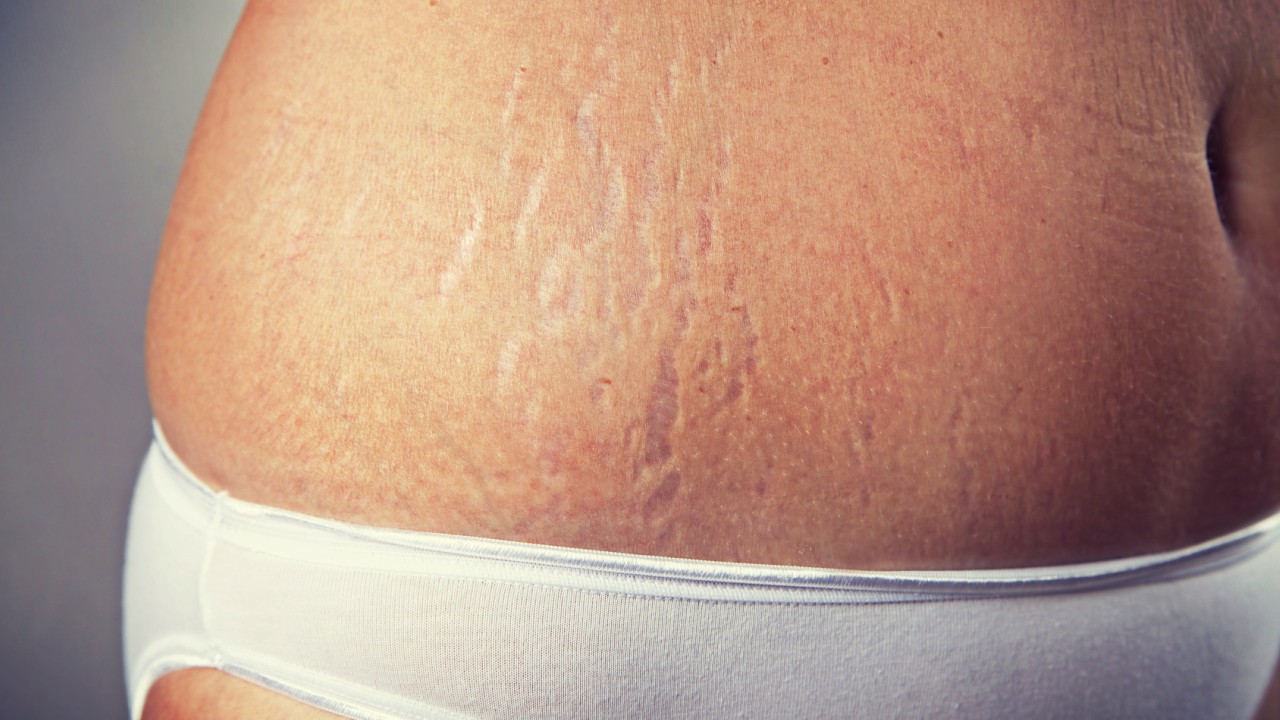
Stretch marks—also called striaedistensae—are a form of dermal scarring caused by rapid stretching of the skin. They often appear during:
- Pregnancy
- Puberty
- Rapid muscle growth
- Weight gain or loss
- Corticosteroid use
When the skin is overstretched, the collagen and elastin fibers in the dermis tear, leaving behind streaks that initially appear red, purple, or dark brown and may fade to silver or white over time.
Although they pose no health risks, many people seek treatment to improve skin aesthetics.
Stretch Marks and Laser Treatment: How It Works
How Laser Technology Targets Stretch Marks
Laser therapy helps by:
- Stimulating collagen production
- Breaking down scar tissue
- Improving skin elasticity
- Promoting healthy skin regeneration
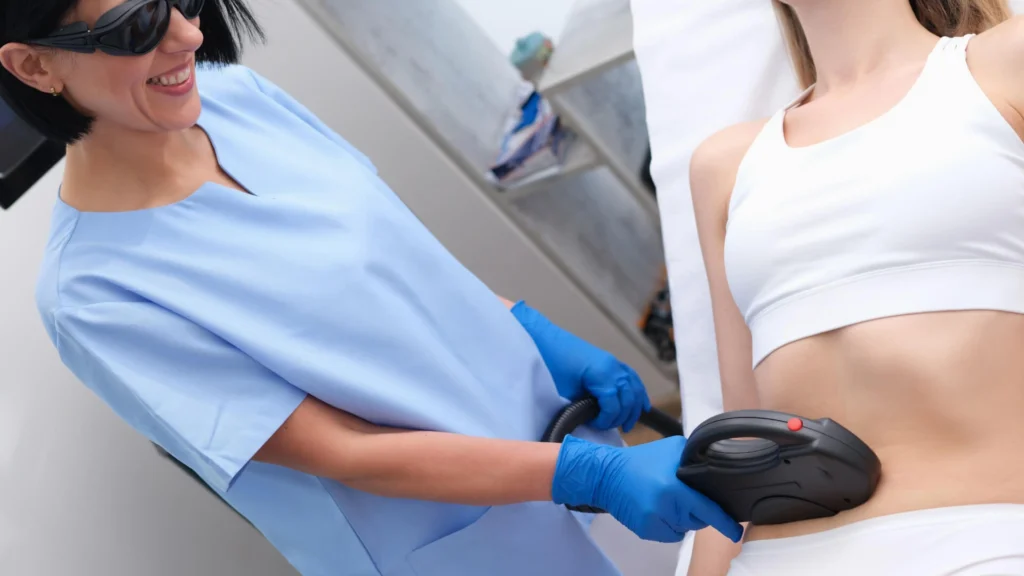
The procedure involves applying a laser device to the skin, emitting targeted light energy that penetrates the dermis without harming surrounding tissue.
Different Types of Laser Treatments
Each laser type is chosen based on your skin tone, stretch mark color, and skin sensitivity:
| Laser Type | How It Works | Best For |
| Fractional CO2 Laser | Removes damaged skin and stimulates healing | Older, white stretch marks |
| Pulsed Dye Laser | Targets blood vessels, reducing redness | Newer, red or purple stretch marks |
| Erbium YAG Laser | Gently resurfaces the skin | Mild to moderate stretch marks |
| Excimer Laser | Encourages melanin production | Hypopigmented (white) marks |
Treatment Process: What to Expect
Consultation: Your provider will assess your stretch marks, skin type, and medical history to create a personalized plan.
Procedure Day:
- Skin is cleansed and numbing cream may be applied.
- Laser is passed over the treatment area.
- Post-treatment products (like soothing serums or ointments) are applied.
Recovery:
- Minimal downtime (typically 1–3 days)
- Redness, swelling, or flaking may occur
- Avoid sun exposure and use SPF 30+ daily
Benefits of Laser Stretch Mark Removal
Here are the standout advantages:
- Clinically proven results
- Non-surgical, outpatient procedure
- Safe for most skin types
- Reduces both new and old stretch marks
- Improves overall skin texture and tone
Are You a Good Candidate?
Laser stretch mark removal is suitable for:
- Individuals with fair to medium-dark skin tones (some lasers may require caution with darker skin)
- People free from active infections or certain skin conditions
- Non-pregnant, non-nursing individuals
- Those committed to multiple treatment sessions and aftercare
Patients with keloid tendencies or very deep striae may need alternative or complementary treatments such as microneedling, PRP therapy, or radiofrequency.
Stretch Marks and Laser Treatment: Is It Worth It?
If you’re serious about restoring your skin’s natural look and feel, stretch marks and laser treatment are a combination worth exploring. With advanced technology and expert guidance, laser therapy offers long-lasting aesthetic improvements—often with minimal discomfort or downtime.
Aftercare Tips for Long-Lasting Results
Maximize your laser results with proper aftercare:
- Avoid direct sunlight for 2 weeks
- Apply healing ointments as advised
- Avoid harsh skin products
- Keep the skin hydrated
- Schedule follow-up treatments as needed
Results can last long-term, but new stretch marks may form with significant body changes. Maintenance treatments may help prevent recurrence.
Comparing Laser Treatment to Other Options
While there are many creams, oils, and microdermabrasion tools on the market, none offer the precision and collagen-boosting effects of lasers. Compared to topical treatments:
| Method | Effectiveness | Time to See Results | Skin Penetration |
| Laser Therapy | High | 2–6 sessions | Deep (dermal layer) |
| Topical Creams | Low to Moderate | Weeks to months | Surface level (epidermis) |
| Microneedling | Moderate to High | 3–6 sessions | Medium (into dermis) |
| Chemical Peels | Low to Moderate | Multiple sessions | Surface/medium depth |
Laser treatment stands out for its precision and effectiveness, especially on older or stubborn marks.
Conclusion: Why Consider Stretch Marks and Laser Treatment?
Stretch marks and laser treatment go hand in hand when it comes to achieving smoother, clearer skin. Whether your marks are recent or long-standing, laser therapy offers a safe, effective, and non-invasive solution backed by science. With minimal downtime and visible results, it’s a modern skincare advancement worth exploring. If you’re ready to restore confidence in your skin, consult a certified professional to see if laser treatment is right for you.
Frequently Asked Questions
How many sessions will I need?
Most patients need 3–6 treatments spaced 4–6 weeks apart.
Can it be used on all body areas?
Yes—common areas include the abdomen, thighs, buttocks, breasts, and arms.
Does it hurt?
Mild discomfort may occur, but numbing creams minimize pain.
Is it safe for darker skin tones?
Yes, but certain lasers must be used carefully to avoid pigmentation issues. Always consult a licensed practitioner.
How long do results last?
With proper skin care and lifestyle habits, results can be long-term. New marks may form without maintenance.

Carl Clay is a health blog author who has been writing about nutrition, fitness and healthy living for over 10 years. He also loves to run, hike and bike with her wife.